Some stories don’t come out in everyday conversation.
They show up sideways. In defensiveness. In overworking. In shutting down. In staying too busy to feel. In pretending we’re fine.
Art has a way of calling those stories forward.
That’s part of what makes Jagged Little Pill so powerful. The show doesn’t tidy things up. It does not wrap pain in a bow. It lets the hard things breathe — trauma, addiction, identity, consent, complicated family dynamics — and trusts the audience to sit with them. And that trust is meaningful.
Because sitting with hard things is… hard.
When a Song Hits a Nerve
There’s something about live theatre, especially music, that gets under the surface. A lyric lands, and suddenly your chest feels tight. A scene unfolds, and you think, That feels familiar.
Not because your story is identical.
But because the emotion resonates.
Music bypasses the intellectual part of us that likes to explain everything away. It goes straight to the body. To memory. To that quiet place inside that says, Oh. That.
I’ve sat in theaters before and felt that wave rise unexpectedly. Sometimes it’s grief. Sometimes it’s anger. Sometimes it’s a strange mix of relief and sadness because someone just said out loud the thing I didn’t have words for.
Theater invites us to feel together. To witness stories that echo our own. To recognize ourselves in characters who are trying, struggling, coping, and surviving in ways that are sometimes messy and imperfect.
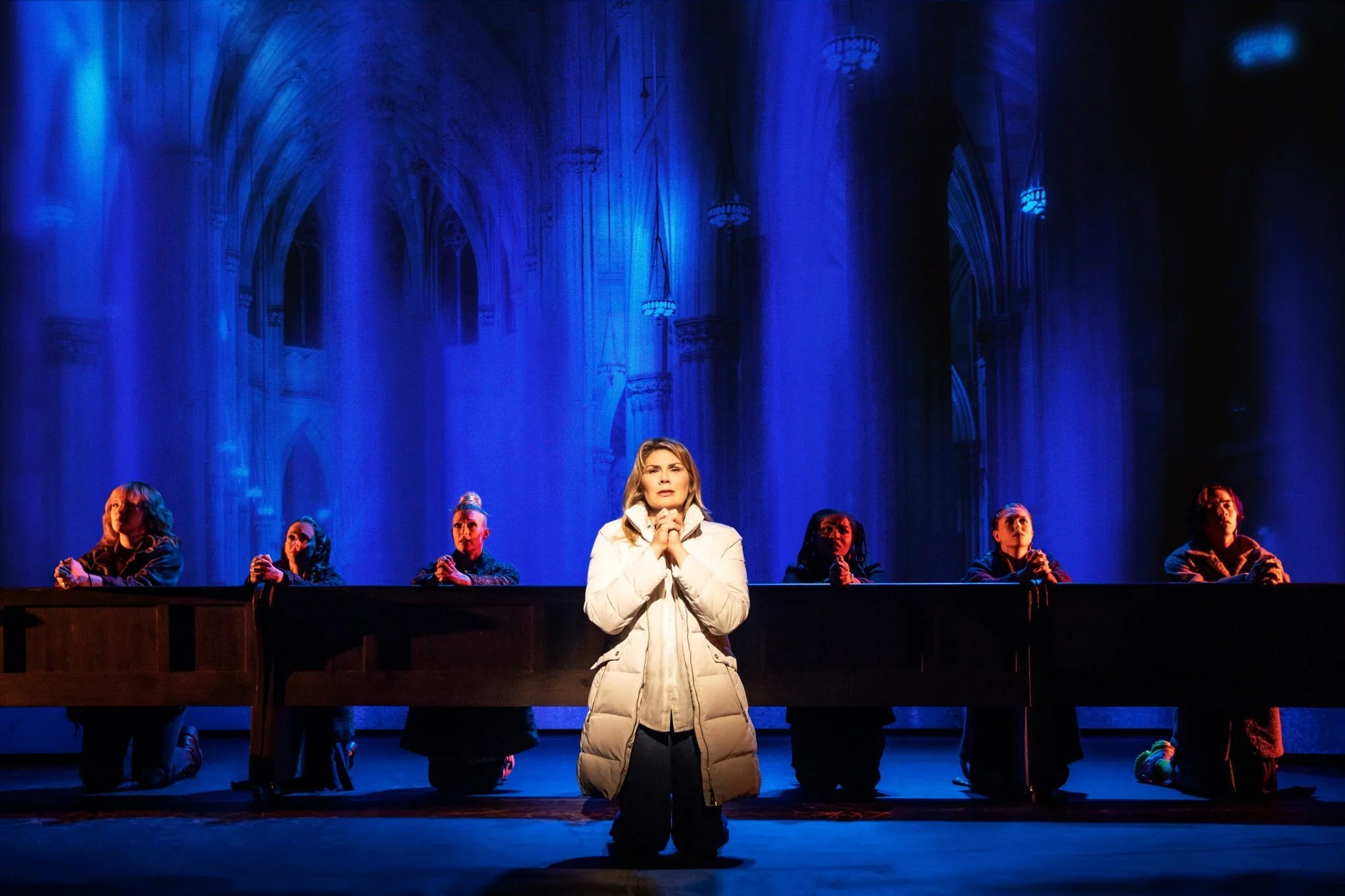
Heidi Blickenstaff and the North American Touring Company of Jagged Little Pill. Photo by Matthew Murphy for MurphyMade.
That shared experience is powerful.
There’s something healing about looking around a dark room and realizing you’re not the only one swallowing hard (and maybe choking back tears) at the same moment.
Trauma, Coping, and the Things We Don’t Talk About
One of the most powerful parts of this show is its willingness to name what is often left unsaid. Consent. Silence. Addiction. The pressure to keep performing “okay” when you’re really anything but.
Addiction isn’t just about a substance. It’s often about relief. About numbing something that feels too overwhelming to hold. Trauma doesn’t disappear just because we push it down. It tends to resurface in patterns, in relationships, in the way we react, and in the ways we protect ourselves.
And identity? Identity is rarely simple. It evolves. It stretches. Sometimes it feels fragile. Sometimes it feels defiant.
These aren’t abstract ideas. They are lived experiences for many people in our community.
Maybe for someone sitting next to you. Maybe for you.
The show doesn’t offer easy answers. It offers honesty. And sometimes honesty is the most compassionate thing we can give.
Why the Conversation Matters
Stories don’t end when the curtain falls.
For some audience members, the performance may simply be moving. For others, it may stir something deeper. A memory. A question. A recognition. Maybe even discomfort.
Discomfort isn’t always a sign that something is wrong.
Sometimes it’s a sign that something important has been touched.
As local therapists sharing space at 215 Society Street, we are honored to support productions like this because they create opportunities for reflection and dialogue. After select performances, we will be participating in post-show panel discussions to extend the conversation in a thoughtful and respectful way.
There is no expectation to share. Listening is enough. Presence is enough.
If the show brings something up, you don’t have to analyze it on the spot. You don’t have to have a tidy takeaway. You don’t even have to know what you’re feeling yet.
You’re allowed to sit with it.
You’re allowed to say, That hit closer than I expected.
You’re allowed to want support around it.
Where Therapy Fits In
Therapy, at its best, isn’t about fixing you. It’s about making space for the parts of your story that haven’t had room to breathe.
Sometimes that looks like untangling old narratives.
Sometimes it looks like learning to stay present when big emotions show up.
Sometimes it’s simply having a place where you don’t have to perform being okay.
In my work at Creative Renewal Counseling & Art Therapy, I see every day how art opens doors that words alone sometimes cannot. When language feels tangled or too vulnerable, creativity gives us another way in. A song becomes a starting point. An image becomes a bridge. A character’s struggle becomes a mirror.
Sometimes we draw what we cannot yet say. Sometimes we collage the pieces of a story that still feel fragmented. Sometimes we simply sit with color, texture, and movement until something inside softens. Art creates just enough distance to look at what hurts, and just enough connection to begin healing it.
Art starts the conversation.
Community keeps it going.
Healing grows somewhere in between.
If this show resonates with you, if a lyric lingers, if a scene sticks, if something feels stirred, consider that an invitation. Not to panic. Just to pay attention.
There is courage in that.
We would love for you to join us for the performance and for the conversations that follow.
And if you find yourself wanting a more personal space to explore what surfaced, Creative Renewal Counseling & Art Therapy is here in Anderson, offering integrative counseling and art therapy for teens and adults.
You do not have to carry your stories alone.
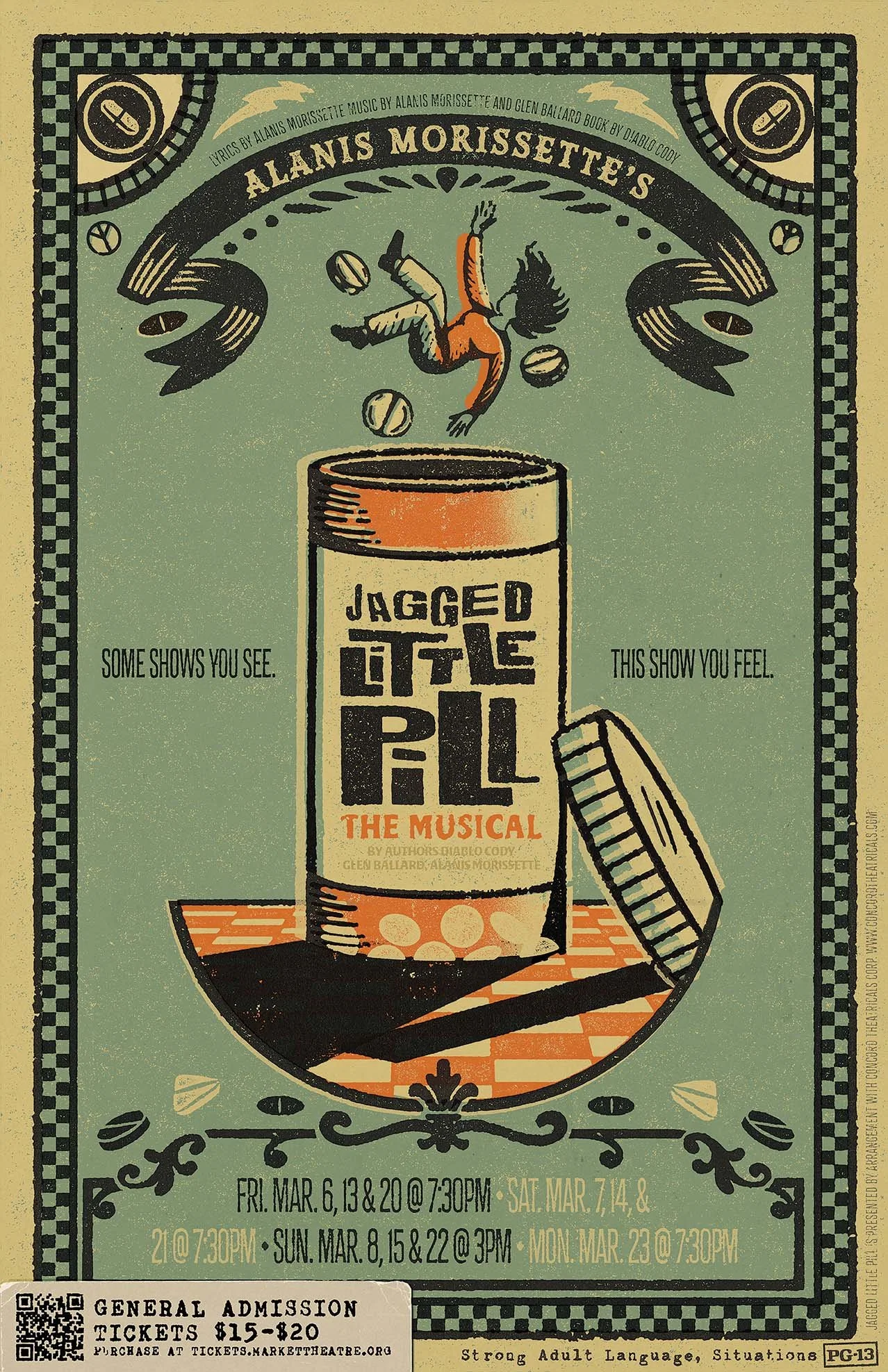
Alanis Morissette’s Jagged Little Pill runs March 6 - 23 at Market Theatre. You can purchase reserved and general admission tickets at markettheatre.org/tickets.
We are proud to be sponsored by Ruth Harbin Counseling and 215 Society Street for this production! If you need counseling services, more information is available at centerforlifeskills.org